
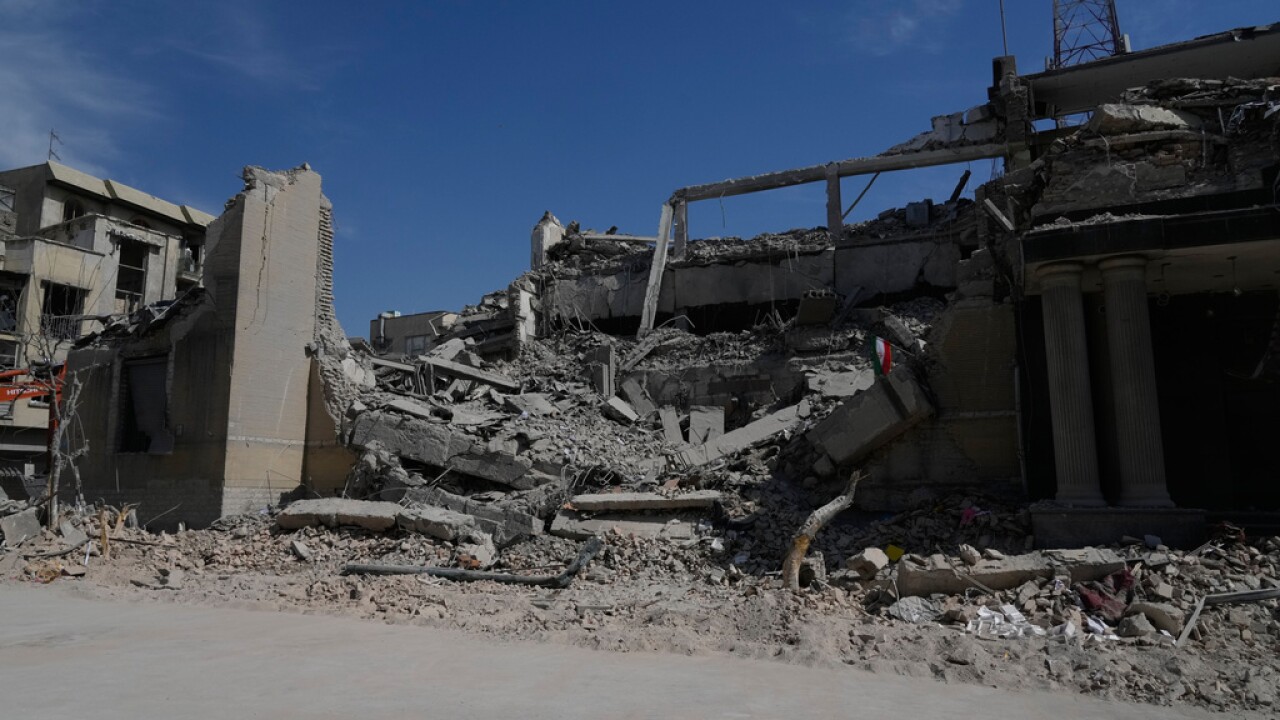


The U.S. Senate voted Wednesday to reject a procedural motion to bring a war powers resolution to the floor that could have limited President Donald Trump's ability to unilaterally carry out military operations against Iran.
With most Republicans standing by the president's decision to launch strikes on Iran, the motion failed in a 47-53 vote that was largely along party lines.
RELATED STORY | Trump’s Iran attack raises legal concerns among Democrats in Congress
The Pentagon has briefed members of Congress on the military operations being carried out in the Middle East but has not sought congressional approval. Democrats have argued Trump must get congressional approval to go to war.
"The answers are very unsatisfying when there's no set plan," Senate Minority Leader Chuck Schumer said. "When you can't hear day after day, we're going to do this, this, this and this. And these are the reasons why you end up with an endless war."
WATCH | Lawmakers divided over limiting military operations against Iran
In terms where a potential vote could stand in the House, Speaker Mike Johnson contended that passing a war powers resolution right now would be a "terrible, dangerous idea," claiming that it's Iran who has declared war on the U.S.
"It would empower our enemies, it would kneecap our own forces and it would take the ability of the U.S. military and the commander in chief away from completing this critical mission to keep everybody safe," Johnson added. "Iran has attacked three of our U.S. embassies in the last couple days, okay. Those are sovereign territories of the U.S. They have declared war on us."
The U.S. military says the first few days of Operation Epic Fury has delivered around twice the number of strikes in Iran than the Shock and Awe campaign of 2003, which marked the beginning of the Iraq War. President Trump has suggested the military campaign could last at least a month, but potentially longer.
The initial wave of airstrikes killed much of Iran's senior leadership, including Supreme Leader Ali Khamenei. With Iran's leadership decimated, attention has turned to who may lead the country next. One possibility is Mojtaba Khamenei, the son of the Ayatollah killed in the airstrike Saturday.
RELATED STORY | Khamenei's son emerges as potential candidate to be Iran's next Supreme Leader
If that selection occurs, it would be viewed by many as a victory for hardliners looking to defend the current Iranian regime. Trump, meanwhile, has acknowledged uncertainty about Iran's remaining leadership.
"I guess the worst case would be we do this and then somebody takes over who's as bad as the previous person. Well, most of the people we had in mind are dead. So, you know, we had some in mind from that group that is dead and now we have another group. They may be dead also based on reports. So I guess you have a third wave coming in. Pretty sure we're not going to know anybody," Trump said.
Iran has responded to the strikes with missiles launched toward Israel and U.S. allies in the Middle East. At least six Americans have died in the conflict so far. The Pentagon late Tuesday identified four of the American service members killed, ranging in age from 20 to 42 — Army reservists from Nebraska, Iowa, Florida and Minnesota.
